Showing posts with label UK. Show all posts

Monday, June 7, 2010

eBAY FIND: SHONKY PRODUCT

CLICK ON AN IMAGE TO ENLARGE
This eBAY find is at once disturbing and reassuring. Disturbing, in the sense that the seller here has no discrimination and is willing to do anything to attract attention to a shonky product. Reassuring, in so much as pulling all the key word tricks here has failed to win the level of bidding real maireener shells attract – on other occasions like shells have failed to win a bid at all. Clearly, the buyers of these necklaces know what they are looking at and what it is they are looking for. Other sellers could do well to learn from this failed entry.

These shells keep turning up and nobody seems to have worked out just where they are from. The Philippines is the best candidate thus far. They are tropical and not from Tasmanian waters. Tasmanian Aboriginal maireener makers would feel insulted to have this work attributed to them as they take great care about the collection and preparation of their shells. While it is possible that they may have dyed their shells at some time there is no evidence of it – anecdotal, circumstantial or concrete.

Also, the seller dated this necklace at 1860/70 and there is a fundamental problem with this it would seem. It is very likely that this necklace was dyed with aniline dyes but these dyes were not invented until the 1890s. Arriving at a date of manufacture for an object often relies upon intuition but here invention ans aspiration seems to have been the main factors informing the intuition. If you do not know, then it is usually better to say so.

If this seller had done some research (any research?) this description could not have been used and the Internet makes this research very easy to do – simply Google 'maireener' necklace to start.

Sunday, May 30, 2010

eBAY Find – May 2010 UK - maireener shells

CLICK ON AN IMAGE TO ENLARGE

SOLD: 4Bids Winning bid: £170.00 Approx AU $298.14
Clearly this necklace has been dyed and in most other respects bears the hallmarks of a commercially produced 'Hobart Necklace'. The presence of a clasp reinforces this but it is hard to tell from the photographs if this thread is still dyed as it seem s that these necklaces were dyed after stringing. Almost all the circumstantial evidence points to this necklace being a Hobart Necklace and it being quite unlikely for it to have had a Tasmanian Aboriginal maker as is suggested here.

Typically all these necklaces were assumed to be "Tasmanian Aboriginal Shell Necklaces" but now the evidence suggests that where there is no provenance to verify Aboriginal authenticity it is unsafe to assume Aboriginal authenticity albeit that it is made from Tasmanian maireener shells.

Saturday, May 22, 2010

eBAY Find – May 2010 UK–maireener


CLICK ON AN IMAGE TO ENLARGE
There seems to be no evidence of dyes being used on this necklace to enhance the colour and/or iridescence of the shells. The fact that it has a clasp suggests that it is the product of commercial production or more likely to be so than it may be Aboriginal production. However, there are many ways it may have gained this clasp that does not preclude it from being of Aboriginal origin in Tasmania.

Circumstantially, the fact that this necklace turns up in the UK, and that it is short, and that it's clasp is of the kind that it is, all this in turn tends to suggest that it was commercially produced and exported to the UK sometime between the turn of the turn of the 20th C and WW2. An examination of the string may well enable a more specific dating.

Whatever, the necklace is an exemplar of the ambiguous maireener shell necklaces turning up on the international antique market.

Sunday, May 16, 2010

eBAY Find – April 2010 UK - maireener shells

CLICK ON AN IMAGE TO ENLARGE
These two necklaces turning up as they have together, and in the condition they seem to be in, offers an insight into the Tasmanian shell necklace trade. Given that to date an oral history that suggests Tasmanian Aboriginal makers regularly, or even at all, dyed their shell necklaces has not emerged in turn this indicated that these necklaces may well be commercially produced 'Hobart Necklaces'. Accepting that circumstantially these necklaces are indeed late 19th or 20th 'Hobart Necklaces' there are some interesting observations to be made.

The first being that looking at the examples of 'Bertie May Necklaces' the evidence here seems to point to his necklaces being more intensely, and less subtly, dyed than these necklaces. Given that May was known to be operating in Hobart Late 1940s >> 1960s in Hobart this tends to suggest that these necklace pre-date WW2.

Given Earnest Mawle's report on the shell necklace trade in Tasmania and the dying of maireener shells this tends to date these necklace before WW2. Also, Mawle talks about the disparate quality in shells harvested for 'the trade' and likewise given the evidence for this in regard to the shells turning up in the UK & USA it seems that there may well have been an incentive dye shell with less colourful iridescence. The shells here have clearly been dyed and similarly they may well have been from made using less colourful, whiter , shells – as likely as not 'harvested' on the Tasman Peninsular.

Saturday, May 15, 2010

eBAY Find – May 2010 UK- maireener shells

CLICK ON THE IMAGE TO ENLARGE
These shells appear to have been dyed which in turn suggests that they are a part of the 'Hobart Necklace' story. Thus far with the dyed – apparently dyed? – shells discovered online the quality of the dye process seems to vary considerably. The sure fire method of determining whether or not a necklace has be dyed is that threading will also be dyed.

That is not the case with "broken necklace" here but that is hardly surprising given that these necklaces are likely to have been restrung many times. The Mawle Report refers to these necklaces being dyed in some cases. Mawle also talks about the variety of quality in shells which in turn suggests that those with 'less disable colouration' were dyed.

Friday, May 14, 2010

eBAY Find – May 2010 UK- maireener shells


CLICK ON AN IMAGE TO ENLARGE
This is an interesting necklace from a couple of perspectives. Firstly, it is typical of the ambiguous necklaces described as Hobart Necklaces and it almost equally could have made on the Furneax Islands by Tasmanian Aboriginal women. It is clearly Tasmaniana but given that so many of these necklaces are now appearing on the market the veracity of the claims of Aboriginal authenticity is open to challenge.

Many of these necklaces were dyed with aniline dyes and the older examples seemed to have been dyed more subtly/cleverly than those that have turned up and made post WW2. This necklace could well be an example of the older dyed Hobart Necklaces reported on by E. Mawle in 1918. It would be necessary to do a physical chemical test to verify that this necklace had been dyed.

Saturday, May 8, 2010

eMAIL Alert: maireener shell necklace collection via eBAY & Western Australia

CLICK ON AN IMAGE TO ENLARGE


CLICK ON AN IMAGE TO ENLARGE

JW6710, the eBAYER here, brings some special knowledge to this collection, namely qualifications and experience as a jewellery designer. The fact that she operates from an out of the way place says something about contemporary cultural production and the unlikely places eBAY reaches.

JW6710 has supplied these images of a sample of her collection not only as a demonstration of what can be found on eBAY but also the diversity of maireener shell necklaces. From all accounts these necklace come 'provenance free' and one assumes these items come to light via clearance sales, estate auctions and the like. Apparently they are kind of things that hang around in bottom drawers as memoirs of the past and far too precious to throw away – albeit that very often they are sold for very little.

NECKLACE # 6: The circumstantial evidence is that all of these shell necklaces are quintessentially Tasmaniana but their 'cultural context' is nonetheless ambiguous. All but #6 are typical of the maireener necklaces turning up that bear all the hallmarks of being 'Hobart Necklaces'. The #6 necklace is somewhat curious in that it is made using juvenile shells which in turn would mean that the effort in stringing is considerably more than 'the typical Hobart Necklaces'.

Extrapolated from this are the facts that given that commercially harvested shells were paid for by the quart they may well have been less attractive to harvest. Also, given the additional number of shells in a necklace they would be more time consuming to string. If payment for stringing was paid by the piece these necklaces may have been more expensive. Earnest Mawle's report 1918 makes no mention of the use of juvenile shells – this does not by necessity discount their use in Hobart Necklaces however.

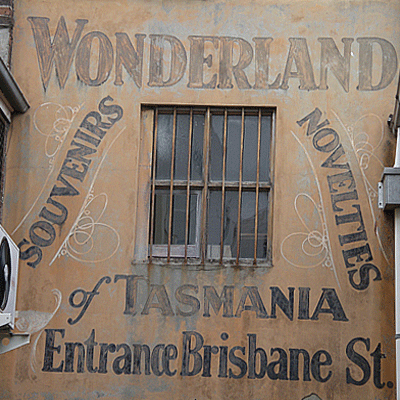
In Launceston in the 1940s/50s maireener necklaces made with juvenile shells were available and circumstantially it seems that these necklaces were sourced in the Bass Strait Furneax Islands rather than Hobart – and say the Bertie May operation. Albeit speculative, there is a first hand reports of necklaces made with juvenile shells being purchased at Wonderland Brisbane St. Launceston 1940s and circumstantially these necklaces are most likely to be of Aboriginal production on the Furneax Islands.

Thank you JW6710 for sharing a part of your collection!

Thursday, May 6, 2010

eBAY Find – May 2010 UK

NOTE: This seller seems to be alert to the discourse relative to the the eBAY Key Words used to alert buyers to this class of necklace. Notably the necklace's 'cultural ambiguity' is acknowledged and "Aboriginal" does not appear in the description.

Wednesday, April 28, 2010

Found on eBAY: Shell Necklace – UK

This necklace is not as described albeit that the seller seems to have chosen the language they've used rather carefully. They have used "key words Aboriginal & maireener" to attract attention to their entry. These key words seem to have won considerable currency in the past 12 to 18 moths on eBAY. So it is worth doing some unpicking.

maireener is a Tasmanian Aboriginal (palawa-kani) word that in its contemporary context means a group of shells 'rainbow kelp shells'Phasianotrochus irisodontes, Phasianotrochus eximius Phasianotrochus apicinus – used and prized by Tasmanian Aboriginal shell necklacemakers. As an eBAY key word it is increasingly used euphemistically by sellers to describe almost any small iridescent/opalescent in a shell necklace. This 'eBAY euphemism' becomes deceptive and is arguably used to 'attract' buyers looking for a particular aesthetic. On eBAY the word has clearly entered the lexicon and has become a powerful, and ambiguous, key word – buyers beware.

Aboriginal (first; original; indigenous; primitive; native) is an interesting eBAY key word. It may be claimed as a 'global' word carrying the meanings that it does with the subtext 'exotic and other.' In an eBAY key word context, "Aboriginal" typical refers generically to 'Australian Aboriginal' and in relation to shell necklaces it evokes 'Tasmanian Aboriginal' . The word "aboriginal" (lower case spelling) is ambiguous and "Aboriginal" has become the convention to denote Australian Aboriginal. Nonetheless, as an eBAY key word it is ambiguous and often used that way by sellers looking to attract buyers with a particular sensibility. Interestingly when doing so, and deceptively, they turn these buyers off!

This eBAY entry is an example of the key words being used as euphemistic baits for buyers looking for the 'exotic and other'. Is the wording deceptive, naive, ill-informed and deliberate? It is an open question! Let's say all of the above but in different ways at different times and in different contexts.

GOOGLE KEY WORDS: eBAY, 120561637648, Aboriginal, Tasmania, Tasmanian, shell necklace, Ilkley, United Kingdom, vintage, antique, maireener, pearlescent,
iridescent, opalescent, rainbow kelp shell, deceptive.

Sunday, April 25, 2010

eBAY Find – April 2010 UK - maireener shells

Click on the image to enlarge
SOLD FOR AU $174.25

COMMENT: To claim Aboriginal authenticity sellers need to rely upon more than scant circumstantial evidence and indeed provide sound provenance to back up the assertion. There does not seem to be such provenance here. However, the shells in this necklace may well have been gleaned from a Hobart Necklace. Again, this necklace's description suggests that Aboriginality, if it can be established , adds value to these necklaces and that the word 'maireener' has currency on eBAY.

Saturday, April 24, 2010

eBAY Find – April 2010 UK

CLICK ON THE IMAGES TO ENLARGE


This necklace opens up some interesting areas of speculation. If it turns out that shells are identifiable as Tasmanian it may be linked to the necklace depicted in the 'Butterfield Photograph' [ link 1 ] • [ link 2 ] and if it is it may tell us something more about 'Hobart Necklaces' in Tasmania. If the shells can be identified as coming from the UK as implied by the seller here it may tell us something about the trade Hobart Necklaces were a part of.

Watch this space!
Alerted by: PD-SB.US

Tuesday, April 6, 2010

Found on eBAY: NOT a maireener, NOT Tasmanian, NOT made by a Tasmanian Aboriginal maker.

Apparently someone told the seller here that one the same that sold for over £100. If that was so then maybe it would have been good to quote the eBAY item number. The good thing about eBAY is that it is a very good research tool.

Necklaces made with Tasmanian maireener shells do quite often sell for over £100 and contemporary maireener shell necklaces made by Aboriginal makers sell for well over £100.

So you have to wonder if the one that apparently sold for over £100 was the same as this one. Without the evidence it is impossible to say. But clearly such necklace's 'Aboriginality' does seem to add value to them.

Anyway the buyers are able to do their research and this one didn't attract a bid let alone reach the seller's reserve.

Thursday, January 7, 2010

eBAY Find – Jan 2010 UK - maireener shells

CLICK ON AN IMAGE TO ENLARGE
SELLERS NOTE: I believe this to be a childs necklace as it is only 12ins long with the brass push in fastener but the shells are beautiful a light iridiscent creamy green with purple .the shells are in good condition with tiny chips on about six shells. A rare and beautiful treasure