Showing posts with label maireener shells. Show all posts

Friday, May 13, 2011

ON eBAY May 2011: "Antique Tasmanian Maireener Shell Aboriginal Necklace"


SELLER'S DESCRIPTION: Item N0. 380338511035
"Antique 1900s Tasmanian Maireener Shell Aboriginal Necklace Purple

This wonderful Guaranteed Antique 1900s Tasmanian Maireener Shell Aboriginal Necklace in the rare Purple Iridescent colour is a brilliant example of such shell necklaces. The shells are a wonderful lustrous iridescent purple colour and are in exquisite condition with only a very few missing their points. The shells are well strung on a fine purple silk string and measure 42 cm (overall 168 cm if a single line).

Unfortunately my pictures do not capture the beautiful iridescent glow of these shells. I am loathe to sell this piece but believe it should be in the hands of a real collector for its colour rarity and age.

Please study the array of photos as they are part of the description and ?show the wonderful condition, patina and character better than I can ?explain. Measures: 42 cm long (quadrupled) and 188 cm (single line), shell size approximately 1cm Weight: 35 grams."

SELLER'S DESCRIPTION: Item N0. 380338515166

"Antique 1850s Tasmanian Maireener Shell Aboriginal Necklace Green


This wonderful Guaranteed Antique 1850s Tasmanian Maireener Shell Aboriginal Necklace in the rare Green Mauve Iridescent colour is a brilliant example of such shell necklaces. The shells are the finest and smallest shells I have seen in these type of necklaces and are a wonderful lustrous iridescent green and mauve colour and are in exquisite condition with none missing their points. The shells are well strung on a fine white silk string and measure 62 cm (overall 122cm if a single line).

Unfortunately my pictures do not capture the beautiful iridescent glow of these shells.
I am loathe to sell this piece but believe it should be in the hands of a real collector for its colour rarity and age.

Please study the array of photos as they are part of the description and ?show the wonderful condition, patina and character better than I can ?explain. Measures: 87 cm long (doubled) and 174 cm (single line) shell size approximately 0.3 - 0.5cm Weight: 10 grams"

The seller has not provided, or offered to provide, any evidence that these necklaces are of Tasmanian Aboriginal cultural production. Without such evidence these necklaces cannot be automatically assumed to be "Aboriginal" as claimed in the description.

Sellers who claim
"Aboriginality" for these necklaces seem to be attempting to cash in on the premium contemporary Tasmanian Aboriginal makers are winning for their necklaces. If they are indeed Aboriginal cultural products there needs to be evidence/provenance to support the claim.

So buyers looking for Aboriginal cultural production should beware. For more information go to:


Monday, June 21, 2010

eBAY Find – June 2010 USA - maireener shells

SELLER'S NOTES:
  • #2_ Vintage Tasmanian Maireener Shell Lei Necklace Iridescent Pink
    This is a beautiful vintage Tasmanian Maireener Shell lei necklace. The shells are strung on thread. I do not know if these shells were dyed [almost certainly they have been] or not, but they awesome shades of iridescent pink and blue green colors ... It is in excellent condition and I do not see any broken or missing shells. It measures approximately 34 inches long from end to end ... SOLD FOR: US $152.49 = Approx.AU $175.32
  • #3 _Vintage Tasmanian Maireener Shell Lei Necklace Iridescent White
    This is a beautiful vintage Tasmanian Maireener Shell lei necklace. The shells are strung on thread. I do not know if these shells were dyed or not, [unlikely to have been]but they awesome shades of iridescent blue green colors ... It is in excellent condition and I do not see any broken or missing shells. It measures approximately 34 inches long from end to end.... SOLD FOR: US $149.99 Approx. AU $172.44
  • #1 _ SOLD FOR: US $247.50 Approx. AU $284.55
The most interesting thing about this eBAY sale is that these maireener shell necklaces were described as they were ... "Vintage Tasmanian Maireener Shell Lei Necklace " ... They seem to have come to the seller's possession via West Coast USA sources and it is possible that one way or another the Hawaiian links have been subliminally made.

Monday, June 7, 2010

Found on eBAY: USA - maireener shells

CLICK ON AN IMAGE TO ENLARGE
Ended: 14 June, 2010 – 10:13:24 AEST – 14 bids
Winning bid:US $292.00 – AU $343.85
This necklace is typical of the necklaces that have ambiguous authenticity and circumstantially becoming less likely to be made by a Tasmanian Aboriginal maker. Here again there is the use of 'maireener' as an eBAY key word to bring these necklaces to the attention to eBAY buyers who are now paying more attention to them. This necklace seems to be of natural colour and at the same time of a colour type that it seems was sometimes dyed.

Sunday, May 30, 2010

eBAY Find – May 2010 UK - maireener shells

CLICK ON AN IMAGE TO ENLARGE

SOLD: 4Bids Winning bid: £170.00 Approx AU $298.14
Clearly this necklace has been dyed and in most other respects bears the hallmarks of a commercially produced 'Hobart Necklace'. The presence of a clasp reinforces this but it is hard to tell from the photographs if this thread is still dyed as it seem s that these necklaces were dyed after stringing. Almost all the circumstantial evidence points to this necklace being a Hobart Necklace and it being quite unlikely for it to have had a Tasmanian Aboriginal maker as is suggested here.

Typically all these necklaces were assumed to be "Tasmanian Aboriginal Shell Necklaces" but now the evidence suggests that where there is no provenance to verify Aboriginal authenticity it is unsafe to assume Aboriginal authenticity albeit that it is made from Tasmanian maireener shells.

Sunday, May 23, 2010

eBAY Find – May 2010 Canada - maireener


CLICK ON AN IMAGE TO ENLARGE
This necklace is 1.8 metres long and one of the longer versions of this class of necklace. These shells appear to be naturally coloured iridescent maireener shell necklaces. It is a typical exemplar of the necklaces that are increasingly appearing on the international – Australia, USA & UK – 'antique' market. Most seem to turning up on eBAY and found via the Key Word "maireener".

Saturday, May 22, 2010

eBAY Find – May 2010 UK–maireener


CLICK ON AN IMAGE TO ENLARGE
There seems to be no evidence of dyes being used on this necklace to enhance the colour and/or iridescence of the shells. The fact that it has a clasp suggests that it is the product of commercial production or more likely to be so than it may be Aboriginal production. However, there are many ways it may have gained this clasp that does not preclude it from being of Aboriginal origin in Tasmania.

Circumstantially, the fact that this necklace turns up in the UK, and that it is short, and that it's clasp is of the kind that it is, all this in turn tends to suggest that it was commercially produced and exported to the UK sometime between the turn of the turn of the 20th C and WW2. An examination of the string may well enable a more specific dating.

Whatever, the necklace is an exemplar of the ambiguous maireener shell necklaces turning up on the international antique market.

Sunday, May 16, 2010

eBAY Find – April 2010 UK - maireener shells

CLICK ON AN IMAGE TO ENLARGE
These two necklaces turning up as they have together, and in the condition they seem to be in, offers an insight into the Tasmanian shell necklace trade. Given that to date an oral history that suggests Tasmanian Aboriginal makers regularly, or even at all, dyed their shell necklaces has not emerged in turn this indicated that these necklaces may well be commercially produced 'Hobart Necklaces'. Accepting that circumstantially these necklaces are indeed late 19th or 20th 'Hobart Necklaces' there are some interesting observations to be made.

The first being that looking at the examples of 'Bertie May Necklaces' the evidence here seems to point to his necklaces being more intensely, and less subtly, dyed than these necklaces. Given that May was known to be operating in Hobart Late 1940s >> 1960s in Hobart this tends to suggest that these necklace pre-date WW2.

Given Earnest Mawle's report on the shell necklace trade in Tasmania and the dying of maireener shells this tends to date these necklace before WW2. Also, Mawle talks about the disparate quality in shells harvested for 'the trade' and likewise given the evidence for this in regard to the shells turning up in the UK & USA it seems that there may well have been an incentive dye shell with less colourful iridescence. The shells here have clearly been dyed and similarly they may well have been from made using less colourful, whiter , shells – as likely as not 'harvested' on the Tasman Peninsular.

Saturday, May 15, 2010

eBAY Find – May 2010 UK- maireener shells

CLICK ON THE IMAGE TO ENLARGE
These shells appear to have been dyed which in turn suggests that they are a part of the 'Hobart Necklace' story. Thus far with the dyed – apparently dyed? – shells discovered online the quality of the dye process seems to vary considerably. The sure fire method of determining whether or not a necklace has be dyed is that threading will also be dyed.

That is not the case with "broken necklace" here but that is hardly surprising given that these necklaces are likely to have been restrung many times. The Mawle Report refers to these necklaces being dyed in some cases. Mawle also talks about the variety of quality in shells which in turn suggests that those with 'less disable colouration' were dyed.

Friday, May 14, 2010

eBAY Find – May 2010 USA - maireener shells

CLICK ON THE IMAGE TO ENLARGE

This necklace is honestly described! Clearly the shells are maireener shells and circumstantial evidence for the necklace originating in Tasmania is convincing. The seller does not mention that this necklace may well be dyed or even may not be aware that some such necklaces were dyed with aniline dyes – this one appears as if it may have been to enhance its colouration.

It is clearly an example of the necklaces now known to be of ambiguous authenticity and as likely as not a 20th C exemplar – early to 1930s – of a Hobart Necklace. Given that this necklace is now in the USA it may well have found its way there via Hawaii.

eBAY Find – May 2010 UK- maireener shells


CLICK ON AN IMAGE TO ENLARGE
This is an interesting necklace from a couple of perspectives. Firstly, it is typical of the ambiguous necklaces described as Hobart Necklaces and it almost equally could have made on the Furneax Islands by Tasmanian Aboriginal women. It is clearly Tasmaniana but given that so many of these necklaces are now appearing on the market the veracity of the claims of Aboriginal authenticity is open to challenge.

Many of these necklaces were dyed with aniline dyes and the older examples seemed to have been dyed more subtly/cleverly than those that have turned up and made post WW2. This necklace could well be an example of the older dyed Hobart Necklaces reported on by E. Mawle in 1918. It would be necessary to do a physical chemical test to verify that this necklace had been dyed.

Saturday, May 8, 2010

eMAIL Alert: maireener shell necklace collection via eBAY & Western Australia

CLICK ON AN IMAGE TO ENLARGE


CLICK ON AN IMAGE TO ENLARGE

JW6710, the eBAYER here, brings some special knowledge to this collection, namely qualifications and experience as a jewellery designer. The fact that she operates from an out of the way place says something about contemporary cultural production and the unlikely places eBAY reaches.

JW6710 has supplied these images of a sample of her collection not only as a demonstration of what can be found on eBAY but also the diversity of maireener shell necklaces. From all accounts these necklace come 'provenance free' and one assumes these items come to light via clearance sales, estate auctions and the like. Apparently they are kind of things that hang around in bottom drawers as memoirs of the past and far too precious to throw away – albeit that very often they are sold for very little.

NECKLACE # 6: The circumstantial evidence is that all of these shell necklaces are quintessentially Tasmaniana but their 'cultural context' is nonetheless ambiguous. All but #6 are typical of the maireener necklaces turning up that bear all the hallmarks of being 'Hobart Necklaces'. The #6 necklace is somewhat curious in that it is made using juvenile shells which in turn would mean that the effort in stringing is considerably more than 'the typical Hobart Necklaces'.

Extrapolated from this are the facts that given that commercially harvested shells were paid for by the quart they may well have been less attractive to harvest. Also, given the additional number of shells in a necklace they would be more time consuming to string. If payment for stringing was paid by the piece these necklaces may have been more expensive. Earnest Mawle's report 1918 makes no mention of the use of juvenile shells – this does not by necessity discount their use in Hobart Necklaces however.

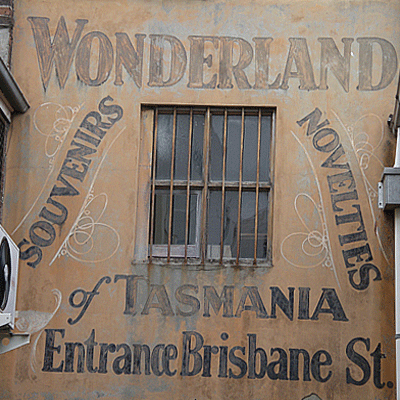
In Launceston in the 1940s/50s maireener necklaces made with juvenile shells were available and circumstantially it seems that these necklaces were sourced in the Bass Strait Furneax Islands rather than Hobart – and say the Bertie May operation. Albeit speculative, there is a first hand reports of necklaces made with juvenile shells being purchased at Wonderland Brisbane St. Launceston 1940s and circumstantially these necklaces are most likely to be of Aboriginal production on the Furneax Islands.

Thank you JW6710 for sharing a part of your collection!

Friday, May 7, 2010

eMAIL Alert: maireener shell necklace via eBAY & Western Australia

CLICK ON THE IMAGE TO ENLARGE

This necklace was bought via eBAY, from USA and it came with with no history or provenance. The owner trades on eBAY, lives in Western Australia and has inquired of some eBAY sellers who have said that "the GIs coming back from the islands WW2, bought back all sorts of shell necklaces with them."

The owner – a professional jeweller and collector of maireener shell necklaces – says that this necklace is dyed and that would make it consistent with the Mary Martin Necklaces circa 1900 to 1920s. Also, it may well be consistent with the necklaces that were exported to Hawaii from Tasmania around the turn of the 20th Century by the Martins.

This necklace may also have been made in Honolulu at the Martin's operation there using shells imported from Tasmania and local labour. The shells are clearly Tasmanian and given the paucity of concrete information and the growing number of options, the necklace is the quinessentual exemplar of the ambiguous maireener shell necklace. Here, Tasmanian Aboriginal production seems highly unlikely however.

Later necklaces were dyed but it seems that with the 'older examples' the dying was more subtle than with those made post WW2 in Tasmania. This example would appear to be older than post WW2 necklaces.

If this stringing is 'original' it is consistent with the kind of way some Hawaiian shell lei are strung and it may have been produced by the Martin family either in Hobart or Honolulu for the Hawaiian market.

Thursday, May 6, 2010

eBAY Find – May 2010 UK

NOTE: This seller seems to be alert to the discourse relative to the the eBAY Key Words used to alert buyers to this class of necklace. Notably the necklace's 'cultural ambiguity' is acknowledged and "Aboriginal" does not appear in the description.

Wednesday, May 5, 2010

Found in Ottawa – Ambiguous Authenticity - maireener shells

CLICK ON THE IMAGE TO ENLARGE

PROVENANCE INFORMATION: "As for this necklace - I rescued it from a bag of jewellery selling for $5 at a flea market this past weekend. This is the first shell necklace I've ever owned and it simply called out to me because if its vibrant colours ... The necklace is strung on what appears to be green cotton (two strands). There is no clasp. The shells are pierced with holes at the top for the thread to go through ... It measures 28 inches ... The shells are quite large - measuring on average between 8 to 10mm ... From what I've read it seems these might be on the larger size - but I'm really not sure .. The colour is shimmering and iridescent. I can't tell if the shells are dyed or not ... Several shells have damage - and some flaking and a few chipped off "end bits" ..." Pers. com _ AV Ottawa-6510

Note: This necklace is unlikely to have been dyed as it presents with strong colour and it seems that those of pale colour were the ones that were typically dyed. Pre WW2 it may have been the Martin family who dyed their shells and it seems they, or some other maker of that era, achieved a subtle result. Bertie May seemed to be the primary 'marketer/manufacturer' post WW2 and the evidence seems to point to his colouration being somewhat more brash.

HOBART NECKLACES – Ambiguous Authenticity - maireener shells

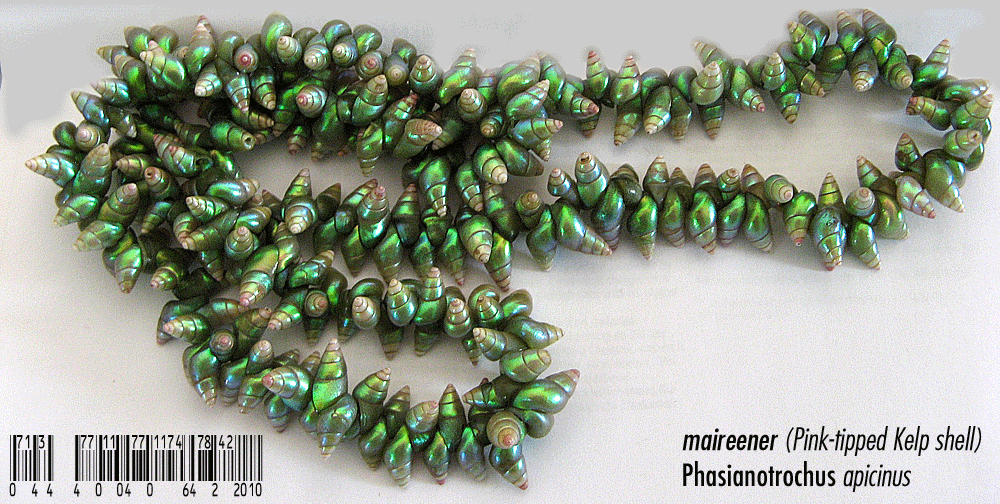
PROVENANCE INFORMATION: There are two necklaces here and they are both in a private collection – one is broken, one is complete. They were purchased from a jeweller’s shop in Criterion Street in Hobart about 20 years ago. They are possibly/probably two of the ‘wholesale’ Martin necklaces. The strings are at least 100 years old ... Source TMAG Hobart Pers Com ... The shells are almost certainly juvenile maireeners (Rainbow Kelp shells) Phasianotrochus irisodontes and typical of the shells coming to light in the USA and UK ...

NOTE:
In the family of the owner of these necklaces there are two more necklaces where there is strong circumstantial evidence that in turn lends strong circumstantial provenance to those necklaces – not these – being of Tasmanian Aboriginal cultural production – NW Tasmania.

Monday, April 26, 2010

Found on eBAY: Shell Necklaces – Adelaide Aus

CLICK ON AN IMAGE TO ENLARGE
Winning Bid: AU $175.50 13Bids
eBAY#: 260591976842CLICK ON AN IMAGE TO ENLARGE
Winning Bid AU$233.50 29Bids
eBAY #: 260591981036
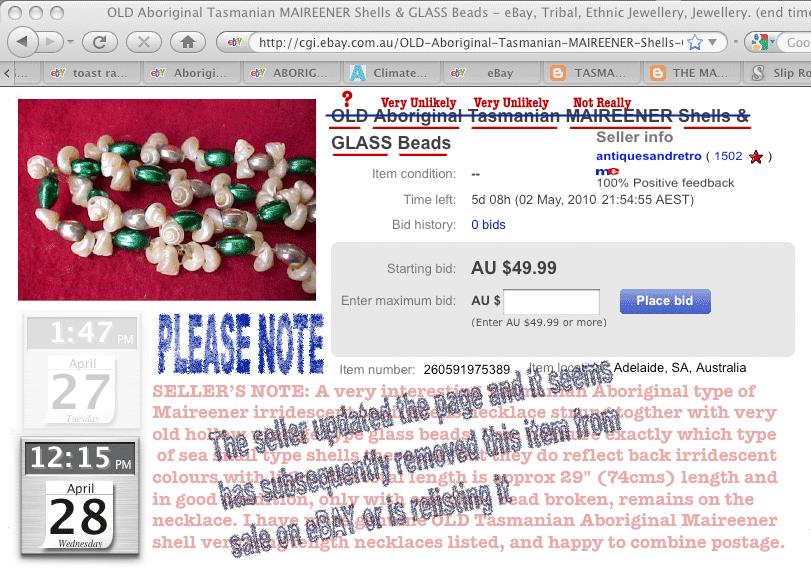
These three listings on eBAY are more interesting together than individually. Looking at the use of the word "maireener" first it seems to be used to invoke 'Aboriginality' but it also seems to have entered the lexicon with the implied meaning 'small irridecent shell for necklace making'.

There is little doubt the true maireener shells did indeed come from Tasmania given that these shells were harvested commercially in Tasmania in the later part of the 19th C up until approx 1960. It is now known that this was not part of the Tasmanian Aboriginal people's cultural production at that time – albeit that they did make shell necklace mimicked by the commercial producers harvesting these shells.

The likelihood of any of these necklaces being made by a Tasmanian Aboriginal maker is very slim. The necklace described a being made of "natural" shell – eBAY #: 260591981036 – may predate the one described as being dyed – this necklace appears to have been dyed also albit more subtly. The former could POSSIBLY have been made by the Martin family's Hobart/Honolulu operation anytime up until circa 1930s. The dyed necklace may have been made by the Bertie May operation in Hobart 1940s >>1960s – eBAY#: 260591976842.

Both could be described as classic Hobart Necklaces.

The necklace with glass beads is quite unlikely to have been of Tasmanian origin EXCEPT in the case that it was made in Tasmania from imported materials and it is known that tropical shells were being imported into Tasmania for the purposes of "shell craft" around the turn of the 20th C – the shells appear to be tropical. Likewise it is highly unlikely that Aboriginal makers had anything to do with this necklace.

Therefore the authenticity of these necklaces must be regarded as being quite ambiguous.

Dyed maireener Necklace

This necklace is entirely as described and no claims were made for that could not be substaniated. There are two obvious options for its origin. The first being the Hobart souvenir trader Bertie May who is known to have produced dyed necklaces such as this. He was active 1940s>>1960. The other option being a maker linked to the Martin family who started producing shell necklaces in Hobart in 1875 and were known tom be trading in 1927.

Earnest Mawle's Report of 1918 is a key reference that contextualises to some extent the 'industry' that produced Hobart Necklaces. Mawle's report refers to the dying of shells. There is beginning to be increasing evidence that Bertie May's production may be able to be distinguished from the dyed shell necklaces of producers/marketers like the Martins.

May's dyeing seems to be more intense in its colouration while necklaces that seem to be older than his are less intense and somewhat more subtle. There is no evidence that Tasmanian Aboriginal makers dyed their shells but it cannot be dismissed out of hand. On the balance of probability, this example seems to be older than May's production and more likely to be of non-Aboriginal production than Tasmanian Aboriginal.

Like all such necklaces there is quite a bit of ambiguity about this example.

Sunday, April 25, 2010

eBAY Find – April 2010 UK - maireener shells

Click on the image to enlarge
SOLD FOR AU $174.25

COMMENT: To claim Aboriginal authenticity sellers need to rely upon more than scant circumstantial evidence and indeed provide sound provenance to back up the assertion. There does not seem to be such provenance here. However, the shells in this necklace may well have been gleaned from a Hobart Necklace. Again, this necklace's description suggests that Aboriginality, if it can be established , adds value to these necklaces and that the word 'maireener' has currency on eBAY.

Saturday, April 3, 2010

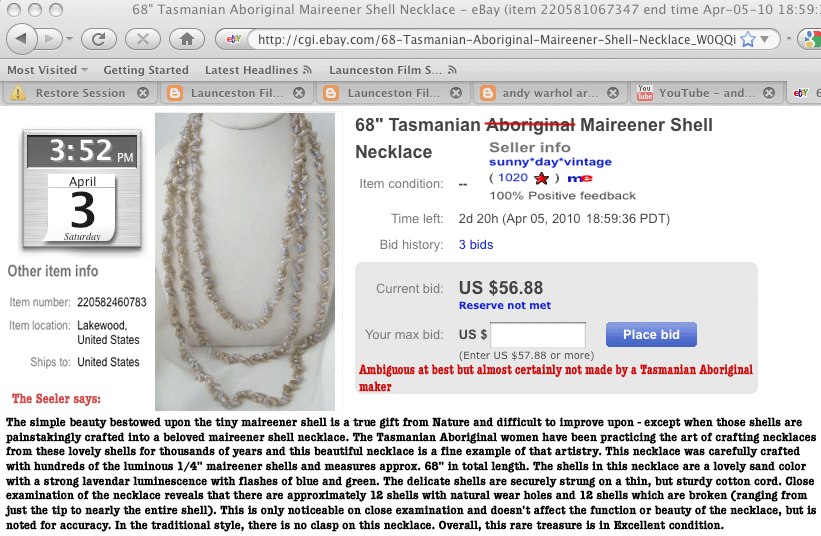
Found on eBAY: USA - maireener shells

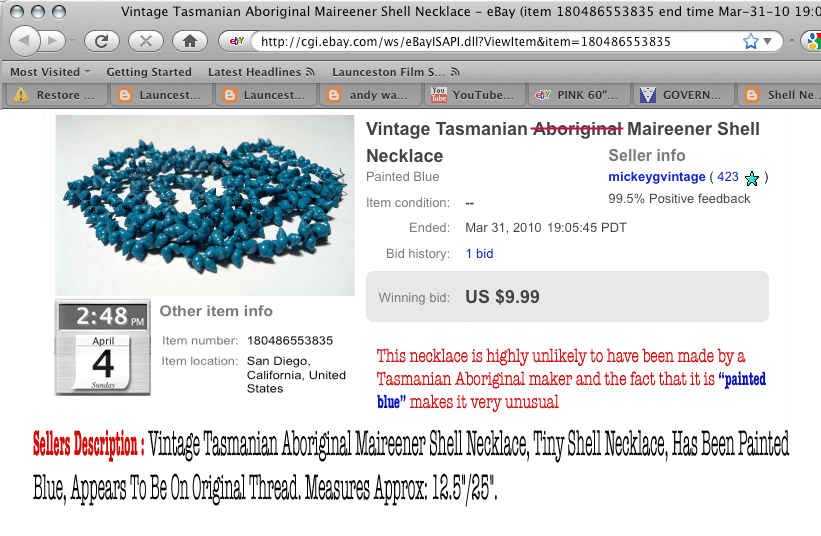
Clearly the only thing that is credible about this necklace is that it is described as having been painted. It may be of 'Tasmanian origin' but that is unlikely and almost certainly it is not of Tasmanian Aboriginal cultural production – contemporary or vintage. The shells may well have originated in Tasmania but that does not by itself imply Aboriginal cultural production.

eBAY FIND- April 2010 USA - maireener shells


NOTE: The necklace above has been relisted and redescribed removing the word "Aboriginal" from the title and description. This reflects the ambiguity of the piece and indeed it may well be a Hobart Necklace circa early 1900s and even one that found its way to the USA via Honolulu.

These finds are continuing evidence that a great many of these necklaces were made and many more than there are likely to have been Tasmanian Aboriginal makers to produce them. – albeit that there were clearly some. It is unclear how the necklaces made as "Hobart Necklaces" in the late 1800s and early 1900s came to be understood as "Aboriginal Shell Necklaces".

eBAY is most likely the vehicle via which the word maireener (the Tasmanian Aboriginal word for the shells and sometimes the necklaces made from them) has entered the 'global' lexicon for these particular shells and seemingly increasingly used by default for all small iridescent shells used for necklace making – Tasmanian & other.

They are also evidence of the global carelessness for the cultural cargo "Tasmanian Aboriginal Shell Necklaces" carry. This is so even though it is increasingly clear that the Hobart Necklaces are blatant mimics of their 'Aboriginal prototypes'. Unless "Aboriginal" carries some kind of cultural cargo that adds value to the necklace it is difficult to explain why these mimics so readily win 'quasie Aboriginal status'.